
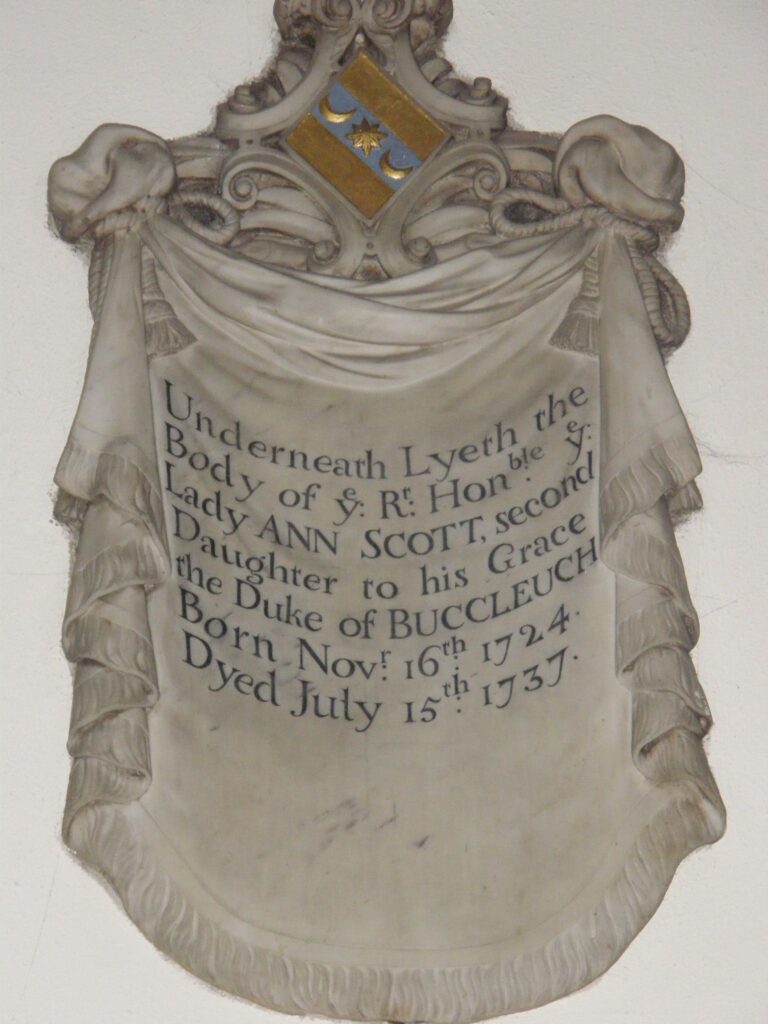
CH59. Tablet in the form of a drape above column
Underneath Lyeth the / Body of ye Rt. Honble. Ye / Lady ANN SCOTT, second / Daughter to his Grace / the Duke of BUCCLEUCH / Born Nov. 16th 1724 / Dyed July 15th 1737.
Scott
A quite small modest monument which reads as follows;
Underneath lyeth the Body of ye Rt Honble Ye Lady Ann Scott
Second daughter to his Grace The Duke of Buccleuch
Born Nov 16th 1724 Dyed July 15th 1737
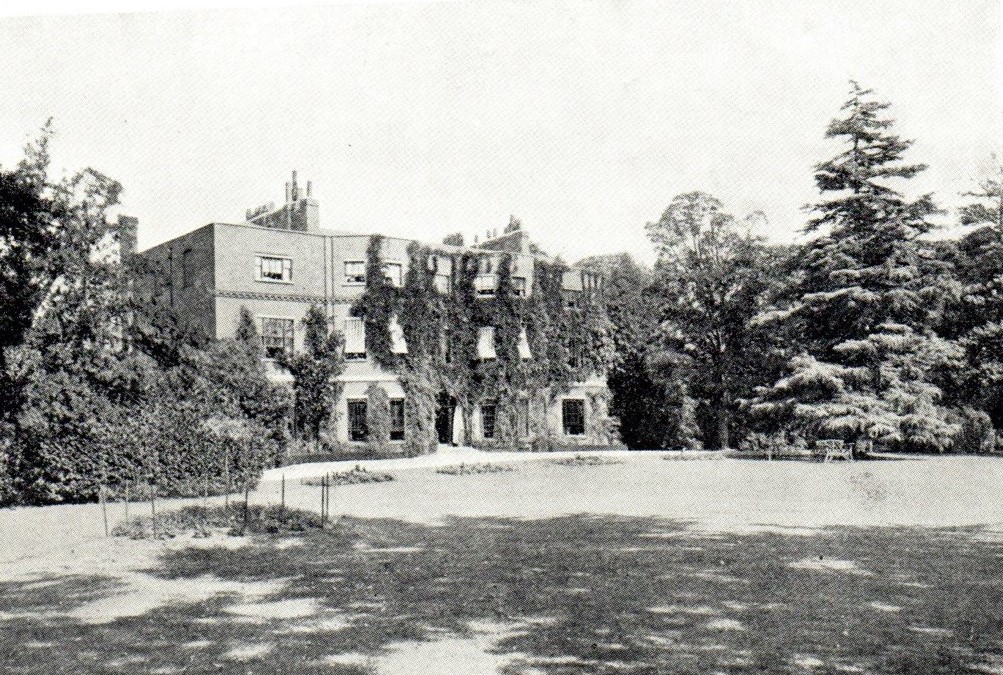
For many years I have gazed at this monument and wondered about Lady Anne and why the daughter of a Duke was buried in Hillingdon. A book by Daniel Lyssons written in 1800 mentions that the Duke of Buccleuch lived for a while at Hillingdon Place, a large mansion on the west side of Long Lane (before you get to Court Drive). The 12 year old Lady Anne must have been living or staying there when she died which is why she is buried in Hillingdon churchyard.
The Dukes of Buccleuch for many generations have been wealthy landowners both sides of the border, in fact the current Duke of Buccleuch, Richard Scott, the 10th Duke, is the largest private landowner in Scotland. Lady Anne’s father, the 2nd Duke of Buccleuch, had strong connections with Berkshire and the Home Counties and he is buried in the chapel at Eton, although his principal seat was Dalkeith Palace in Dalkeith near Edinburgh. He rented Hillingdon Place with his mistresses and illegitimate family, deciding to live with women he loved who were all ‘commoners’. Apparently there are charming letters written by him which survive in the Buccleuch archives in Edinburgh, some of which he wrote whilst in Hillingdon, describing this domestic life. Eventually the Duke married his third mistress in succession, Alice Powell, a laundry woman from Windsor, although he doesn’t seem to have had any children by her.
What a fascinating story lays behind that little monument!
Christine Bartlett